A dark diamond shape gliding over the sand can stop a whole snorkel group in its tracks. If you are wondering where to see rays in San Juan, skip the assumption that you need a boat, a full-day excursion, or a long ride outside the city. Rays can be spotted close to shore in the right protected habitat, including the waters off Playita del Condado.
That does not mean they appear on command. Rays are wild, free-ranging animals with their own schedule. Some days they cruise the sandy bottom like they own the place. Other days, they are somewhere else doing ray business. The best plan is to snorkel in suitable habitat with a guide who knows what to look for, then enjoy every surprise the water delivers.
Where to see rays in San Juan from shore
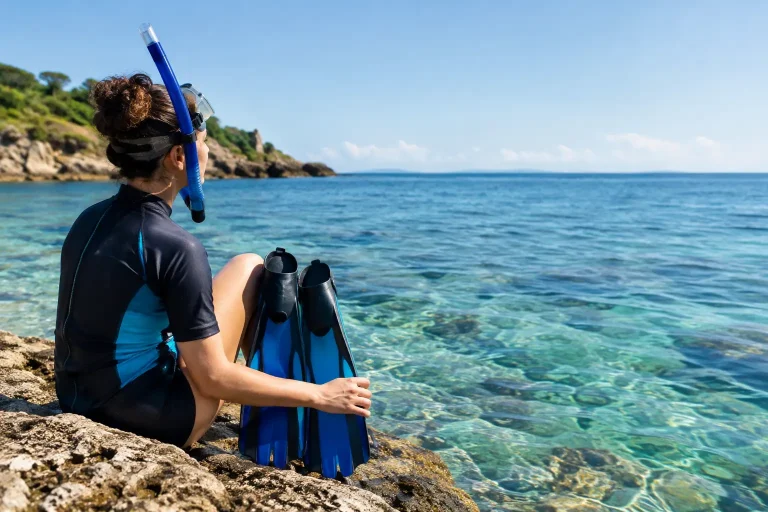
Playita del Condado is one of the most accessible places to look for rays near San Juan. The appeal is simple: you enter from the beach and swim out into a protected marine area rather than boarding a boat. For visitors staying in Condado, it is a real wildlife experience that can fit into a beach day, a lunch reservation, or an afternoon of wandering the city.
Rays often favor areas where sand meets seagrass, reef structure, or scattered rocks. Those bottom transitions give them places to search for food and rest while staying close to cover. From the surface, a ray can be hard to spot at first. Their color helps them blend into the bottom, and their movement is calm enough that people swimming too fast often pass right over them.
A trained spotter changes the game. Instead of zigzagging through the water hoping something appears, you can slow down, scan the bottom, and learn where wildlife is more likely to move. Champion Snorkel guides shore-entry snorkelers through this kind of habitat, with the goal of observing resident marine life without turning the encounter into a circus.
What kind of ray might you see?
Puerto Rico’s coastal waters can host several ray species. Southern stingrays are a possibility in shallow sandy areas, while eagle rays may appear in more open water. The exact species, location, and behavior can vary by season, water conditions, food availability, and plain old luck.
The important part is not trying to identify an animal from twenty feet away before you enjoy it. Watch how it moves. A ray does not swim like a fish. Its broad fins ripple in a smooth, flying motion that makes it look almost unreal underwater. If it settles onto the sand, it may disappear into the background in seconds.
Do not confuse a wildlife encounter with a guarantee. Anybody promising you will definitely see a specific ray at a specific time is selling certainty that nature does not offer. A good guided snorkel gives you better access, local knowledge, and safer conditions. The animals still get the final vote.
The best conditions for ray sightings
Clear water matters because rays spend much of their time near the bottom. When visibility is good, you have a better chance of seeing their outline, spotting the movement of their fins, and keeping a respectful distance. Calm surface conditions also make it easier to float, look down, and stay relaxed instead of fighting chop.
Morning can be a smart choice, especially if you want quieter water and a cooler start to the day. But there is no magic hour that guarantees a ray. Tides, wind, recent rain, cloud cover, and water movement all affect what you see and how easy it is to see it.
Your own pace matters too. Rays reward patient snorkelers. Stop kicking like you are racing to the finish line. Float. Look ahead and below. Scan the pale sand for a shape that does not quite match the bottom. The more calmly you move, the more likely you are to notice the small details: a tail trailing behind, a wingtip lifting off the sand, or a cloud of sediment where an animal has just moved.
How to snorkel around rays without ruining the moment
Seeing a ray is exciting. Chasing it is not. The fastest way to end a good encounter is to swim directly at the animal, corner it against shallow water, or drop your feet toward the bottom to get closer. You stress the ray, stir up sand, and usually block everyone else’s view. Not exactly champion behavior.
Keep your body horizontal and give the animal plenty of room to choose its direction. A guide may signal you to pause or shift position so the ray has a clear path. Follow that lead. The best wildlife encounters happen when the animal acts naturally because nobody is pressuring it.
Never touch, feed, pet, or try to hold a ray. This protects the animal and protects you. Rays have defensive barbs, and while they are not looking for trouble, a frightened or stepped-on ray can react. The rule is wonderfully simple: hands off, feet up, eyes open.
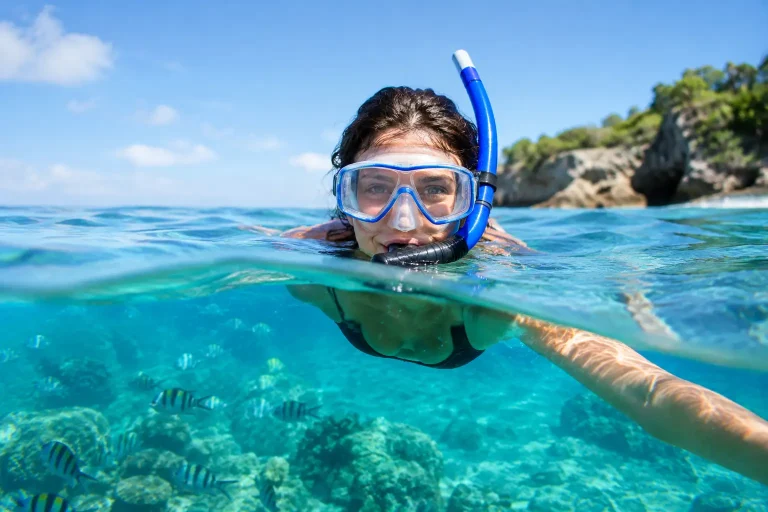
This same approach applies to everything else you may encounter in the water. A snorkel near Condado can bring sightings of sea turtles, tropical fish, starfish, octopus, and occasionally manatees. That is a stacked lineup, but it is still wildlife, not an aquarium. Observe it. Respect it. Let it be wild.
Do you need a boat to see rays in San Juan?
No. A shore-entry snorkel can put you in real marine habitat without the extra time, motion sickness risk, and logistics of a boat trip. You walk in from the beach, use the equipment provided, and swim with a guide through the designated area. For travelers who want a meaningful wildlife activity but do not want to surrender half a day to transportation, that is a major advantage.
There is a trade-off. Shore snorkeling requires you to be comfortable entering open water, swimming beyond the immediate beach area, and adapting to changing visibility or currents. This is not a stand-in-the-water-and-look-down activity. Basic swimming ability is required, and guests should be honest about their comfort level before booking.
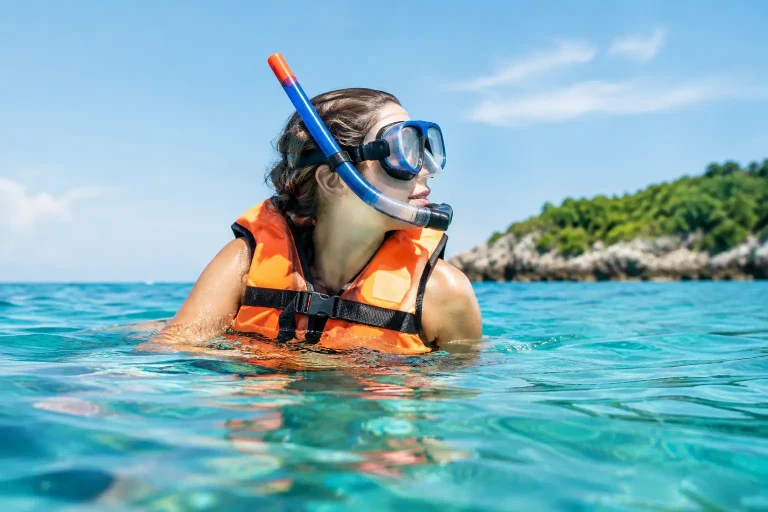
A guided experience typically lasts about one to one and a half hours, which is enough time to get oriented, move through productive habitat, and let the water reveal what is out there. Snorkel gear and USCG-approved life jackets make the setup easier, but they do not replace swimming ability or listening to safety instructions.
A few practical moves before you go
Arrive on time. Wildlife tours run around conditions, group flow, and the limited window guests have in the water. Showing up late does not make the rays wait around for a second entrance.
Bring a swimsuit, towel, sun protection for before and after the water, and an underwater camera only if you can use it without flailing around. Leave valuables behind when possible. If weather or water conditions make a snorkel unsafe, safety wins. A cloudy sky is one thing. Unsafe water is another.
If rays are the animal you are most hoping to see, say so before the tour begins. A guide cannot summon one, but knowing what you are excited about helps them point out the right habitat and teach you what to scan for. And if you miss your favorite animal, ask about the free-reschedule promise rather than pretending the experience was a failure. The ocean has repeat characters, but no fixed cast list.
A ray sighting is not about checking off a species and rushing back to shore. It is that quiet second when the water goes still, a shadow lifts from the sand, and you realize you are sharing space with something completely wild. Give it room, keep your eyes open, and let San Juan surprise you.