Picture it: you have finally spotted the shadow of a sea turtle moving over the reef. The last thing you want is to be fighting to stay afloat, swallowing water, or burning all your energy before the good part starts. So, are life jackets required snorkeling? Sometimes your tour operator will say yes. Local laws can vary. But even when no rule forces you to wear one, a properly fitted life jacket can be the smartest piece of gear you bring into open water.
Are Life Jackets Required for Snorkeling?
There is no single blanket rule in the United States that says every snorkeler must wear a life jacket. Federal life jacket rules are mainly written for people aboard boats, not for swimmers who enter from shore with a mask and fins.
That does not mean you should assume you can skip one everywhere. A beach, marine reserve, guided tour, hotel activity, or local authority may have its own requirements. A tour company can also require flotation gear as a condition of participation. That is not somebody trying to ruin your vacation. It is a safety standard based on the site, the route, the water conditions, and the abilities of the group.
At a shore-entry snorkel spot, conditions can shift fast. A calm-looking surface does not tell you everything about current, surge, fatigue, or what happens when you turn around and realize the beach is farther away than it felt on the way out.
Why Guided Snorkel Tours Often Require Them
Guides are responsible for more than handing out a mask and pointing at the ocean. They are managing a moving group in an environment that does not care about your vacation schedule. Flotation helps keep snorkelers together, makes participants easier to spot, and gives a tired swimmer a safe reset without panic paddling toward shore.
For wildlife-focused snorkeling, it also supports better behavior around animals. When you can float calmly, you are less likely to kick wildly, stand on sensitive habitat, or chase a turtle because you are trying to keep up. Good snorkeling is quiet. You float, breathe, look around, and let the animal decide where it wants to go.
That matters in places where the reward is seeing free-ranging wildlife. A manatee, ray, octopus, or turtle is not there to perform on command. You may see something incredible, or you may not see your personal favorite that day. Life jackets will not guarantee wildlife, but they can help you stay relaxed enough to enjoy the animals that do appear.
A Life Jacket Is Not a Substitute for Swimming Skills
Here is the blunt version: a life jacket does not turn a non-swimmer into a ready-for-open-water snorkeler.
You still need to be comfortable putting your face in the water, breathing through a snorkel, using fins, and swimming in an area beyond the shallow beach zone. You also need to be able to listen to instructions and stay with the group. A vest provides buoyancy. It does not provide ocean awareness, stamina, or good judgment.
If you are nervous but can swim, flotation can be a huge confidence boost. You can focus on slow breathing and looking down instead of constantly calculating whether your feet can touch the bottom. If you cannot swim or are not comfortable in open water, be honest before booking. The ocean is not the place to test whether you secretly have the skills.
What Type of Life Jacket Works for Snorkeling?
Not every flotation device feels the same in the water. For guided snorkeling, operators commonly use USCG-approved life jackets or snorkeling flotation vests. The best choice depends on the activity and the operator’s safety rules.
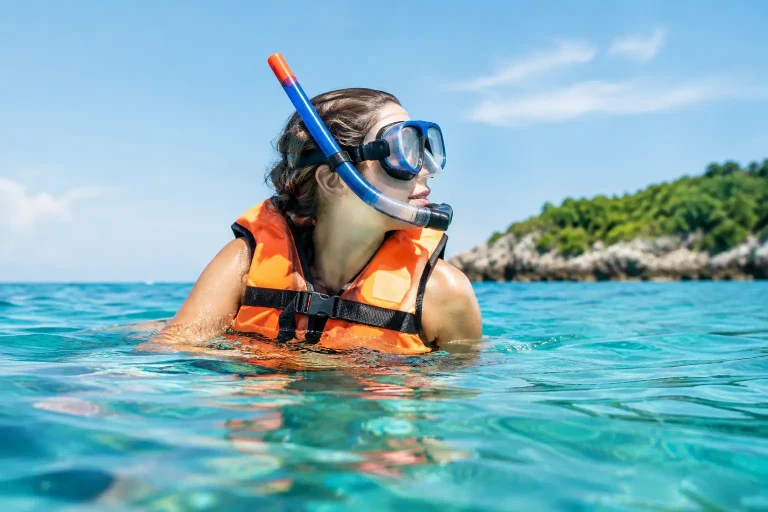
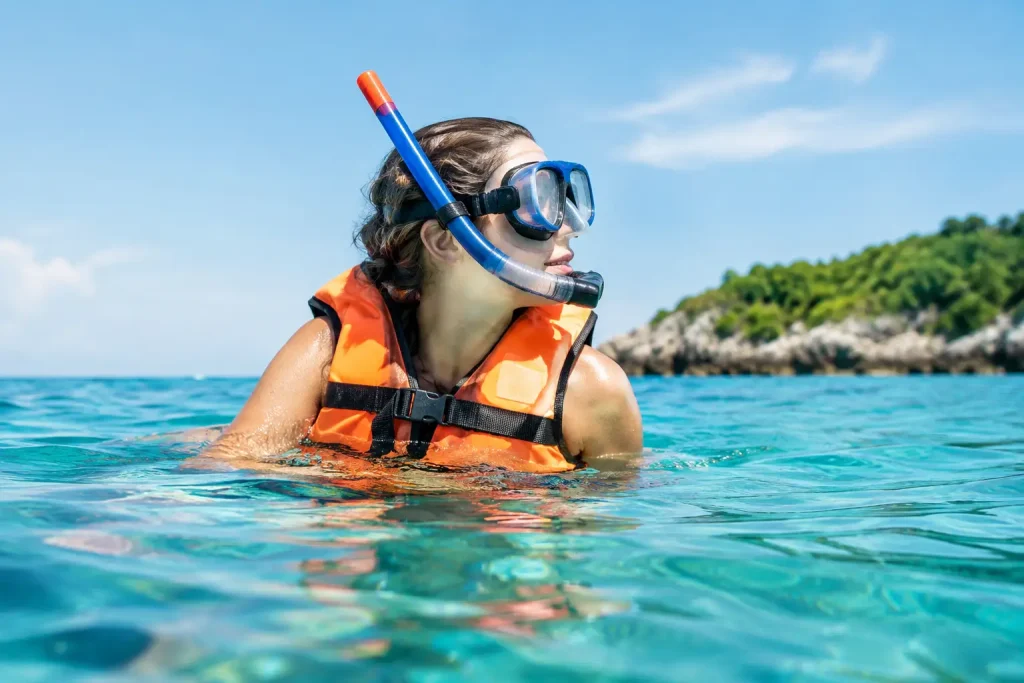
A traditional life jacket offers strong buoyancy and high visibility. That is excellent for safety and group supervision, especially for first-time snorkelers or choppier conditions. The trade-off is that it can feel bulkier and may hold your upper body higher than you expect when you are trying to look down through your mask.
A snorkel vest is often less bulky and can allow a more horizontal position. Some are inflatable, which lets the swimmer adjust buoyancy. But a snorkel vest is not automatically the right option for every person or every tour. It may offer less support than a standard life jacket, and it only works if you understand how to use it correctly.
If your operator supplies USCG-approved life jackets, use the one they fit for you unless they specifically approve your own gear. Bringing a random inflatable from home because it looks sleek in photos is not a safety plan.
Fit Matters More Than Most People Think
A loose vest can ride up around your face. A vest that is too small can feel restrictive and fail to give you the support you need. Before entering the water, tighten the straps so the vest is secure but you can still breathe comfortably and move your arms.
Tell your guide if the fit feels wrong. Do not wait until you are waist-deep, fins on, mask fogging up, and suddenly annoyed by a strap under your chin. That is a very fixable problem on shore and an aggravating one in the water.
When You Should Wear One Even If It Is Optional
Optional does not mean pointless. Wear a life jacket if you are new to snorkeling, returning after a long break, recovering from an injury, or unsure how you will react when you cannot stand up. Wear one if you are tired, the current is stronger than expected, visibility is low, or you are snorkeling farther from shore than usual.
It is also the right call for anyone who wants to spend more time observing and less time treading water. Plenty of strong swimmers wear flotation because it makes the experience easier, not because they cannot swim. There is no medal for making a fun activity harder than it needs to be.
On the other hand, experienced swimmers sometimes prefer less buoyancy in very calm, shallow conditions because it gives them more natural control of body position. That can be reasonable where it is allowed, but only if they understand the environment, stay within their limits, and do not compromise the group’s safety plan.
Snorkeling in San Juan: Read the Water, Not Just the Forecast
A sunny day in San Juan can still come with surge, changing visibility, boat traffic outside a protected area, or a current that surprises visitors. Weather forecasts help, but they are not the whole story. Conditions at the actual entry point matter more.
At Champion Snorkel, guests enter from shore rather than taking a boat. That makes the experience accessible and keeps the focus on the marine sanctuary, but shore entry is still open-water snorkeling. Guests receive gear and USCG-approved life jackets, then follow the guide’s safety direction from the beach through the full experience.
That setup is especially useful for people who want a close wildlife encounter without pretending the ocean is a swimming pool. You can come for sea turtles and manatees, but the rules stay the same: no touching, feeding, petting, or chasing. Float calmly, keep your distance, and let wild animals remain wild.
Quick Questions Before You Get in the Water
Can I take off my life jacket once I am out there?
Not if your guide requires it. Ask before the tour begins, not while the group is already moving through the water. A guide may allow adjustments in certain conditions, but that decision belongs to the operator running the activity.
Do life jackets make snorkeling harder?
They can feel strange for the first few minutes, especially if you are used to swimming without one. Give yourself time to relax into a face-down floating position. Once you stop trying to force yourself underwater, most people find that breathing and observing become much easier.
Can kids snorkel in a life jacket?
Yes, with the right fit, supervision, and swimming ability for the activity. Age alone is not the deciding factor. A confident teen and an anxious adult may need very different levels of support.
Before you book or enter the water, ask what flotation is required, what conditions are expected, and whether the activity matches your actual comfort level. Then wear the gear without ego, listen to the guide, and save your energy for the moment a turtle glides past like it owns the place. Because it does.