A life jacket can help you float. It cannot turn a non-swimmer into someone ready for open-water snorkeling. So, do you need to swim for snorkeling? For a real shore-entry wildlife experience, the honest answer is yes: you need basic swimming ability and the comfort to use it beyond the sand.
That does not mean you need to be a lap swimmer, train for a triathlon, or have perfect freestyle form. It means you can stay calm in water over your head, move yourself forward, and listen to your guide when conditions change. That is the difference between an incredible turtle-or-manatee day and a stressful one.
Do You Need to Swim for Snorkeling? Yes, for Shore Entry
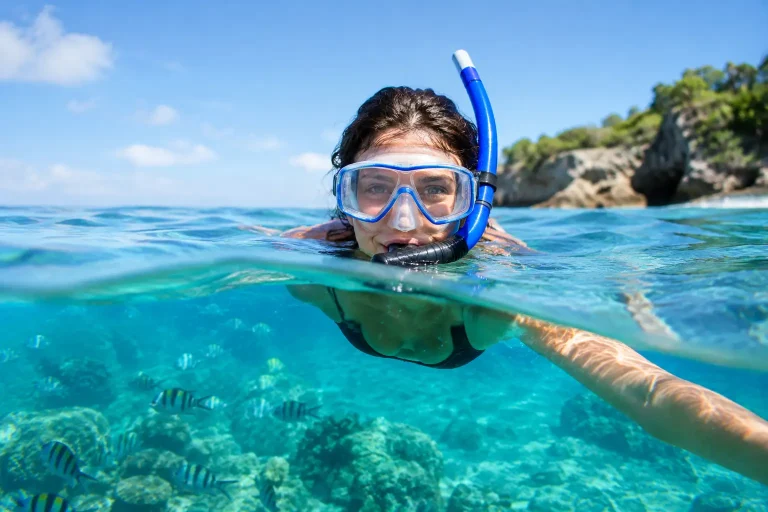
Some snorkeling happens in water so shallow that guests can stand most of the time. That is not the same thing as a guided shore-entry snorkel in a marine habitat. At Playita del Condado, guests enter from the beach and swim out to look for free-ranging wildlife. You may see sea turtles, manatees, rays, schools of tropical fish, starfish, or an octopus hiding in plain sight.
The water is not a pool. Conditions can change with wind, tides, rain, boat wake, visibility, and current. Wildlife also does not follow a script. A turtle may cruise past you in seconds, while a manatee may surface farther down the area. You need enough swimming ability to stay with the group and move safely when your guide directs you.
Basic swimming is not an annoying fine-print rule. It protects you, your group, your guide, and the animals. If someone panics, grabs at wildlife, or cannot maintain control in the water, the entire experience changes fast.
What “Basic Swimming Ability” Actually Means
People hear “you must know how to swim” and picture competitive strokes and deep-end cannonballs. Relax. That is not the bar. But neither is dog-paddling for five seconds while someone holds your hand.
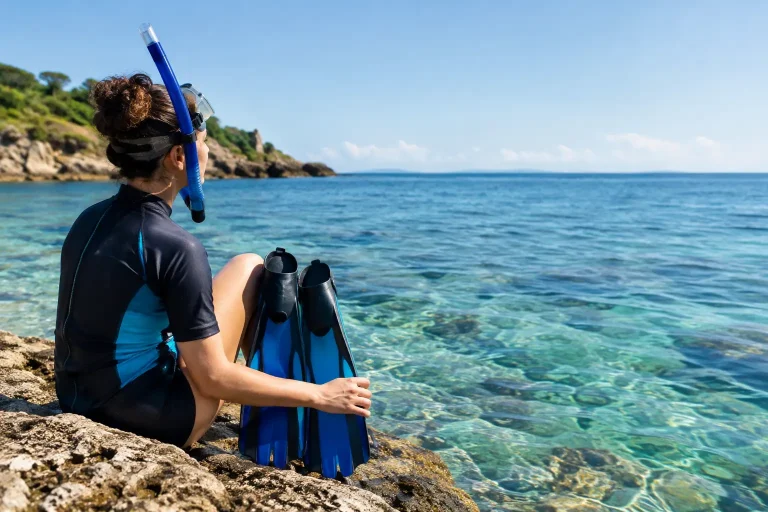
For snorkeling, basic ability means you can float calmly, put your face in the water, breathe through a snorkel after a little instruction, and swim a short distance without needing to touch the bottom. You should also be able to turn around, stop, and swim back toward shore if your guide asks you to.
Comfort matters as much as technique. A person who can technically swim but becomes anxious when their feet cannot touch may not enjoy the experience. Snorkeling is face-down most of the time. You are breathing through a tube, looking below you, and moving with fins. That feels weird for a minute, even for people who are decent swimmers.
The good news: fins do a lot of work. Once you are floating flat and kicking slowly from the hips, you can cover water with less effort than you would while swimming without gear. Slow is good. Thrashing burns energy, fogs your mask, and scares the fish that were about to make your video look amazing.
A Life Jacket Is Support, Not a Loophole
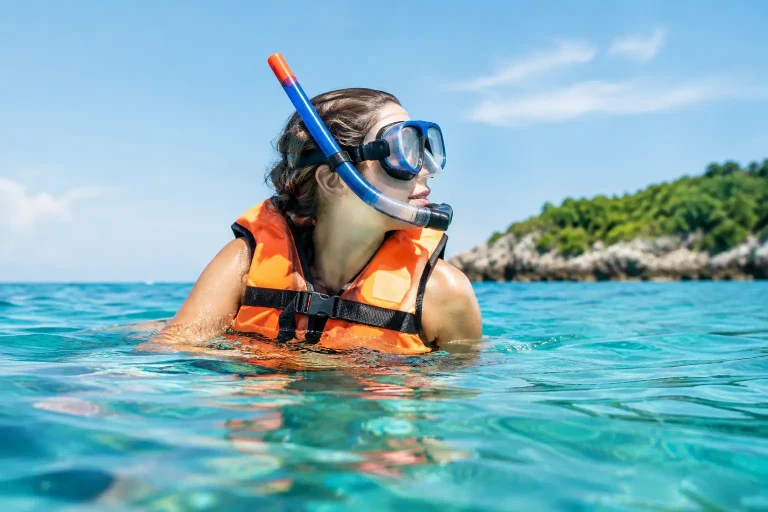
On guided tours, a USCG-approved life jacket provides buoyancy and helps many guests feel more relaxed. That extra float can make it easier to keep your face down, save energy, and recover if you need a moment to adjust your mask or snorkel.
But a life jacket does not replace swimming ability. You still need to propel yourself, stay oriented, and handle the fact that water moves. You may also need to keep your distance from coral, rocks, other guests, and wildlife while floating.
Think of it like a seat belt, not a chauffeur. It is essential safety equipment, but it does not do the driving for you.
At Champion Snorkel, gear and life jackets are provided, and guides explain how to use them before heading out. Take that briefing seriously. Ask how to clear your snorkel, what to do if water enters your mask, and how the group will communicate in the water. The best question is never the embarrassing one. The best question is the one that keeps you calm once you are out there.
When You Should Skip a Snorkel Tour
Skipping is not failing. It is making a smart call before you are waist-deep and regretting every life choice that brought you there.
You should sit this one out if you cannot swim independently, panic in water over your head, or need another person to physically hold you up. The same goes if you have a recent injury, a medical condition that makes exertion or open water risky, or severe motion anxiety that you have not discussed with a medical professional.
Be candid with the operator before booking, not after the group has entered the water. A responsible tour company would rather help you decide whether the experience fits than force a bad situation. Weather and water conditions also matter. Even confident swimmers can face a cancellation or reschedule when conditions are not safe enough for a quality tour.
And no, bravery is not pretending you are comfortable when you are not. Bravery can be saying, “I want to work up to this first.”
Can Beginners Snorkel If They Can Swim?
Absolutely. Plenty of first-time snorkelers are basic swimmers. The key is arriving ready to learn instead of assuming the mask and fins will instantly feel natural.
Before your tour, spend a little time in calm water if you can. Practice floating on your stomach, breathing slowly, and exhaling through your nose if water gets near your mask. If you own goggles, get used to having your face in the water. You do not need a full training plan. You just do not want your first face-down breath through a snorkel to happen while you are already nervous.
On the day, tell your guide that it is your first time. Good guides adjust their explanation, make sure your mask fits, and give you a chance to settle in before moving farther from shore. Stay near the group. Keep your kicks small. If something feels off, signal early instead of silently trying to tough it out.
A beginner who listens is often safer than an overconfident swimmer who decides the rules do not apply to them.
The Wildlife Part Has Rules Too
Swimming ability is also about control around animals. Sea turtles, manatees, rays, and octopuses are not props. They are wild residents going about their day, and the best encounter happens when you give them space.
Do not touch, feed, chase, corner, pet, or try to ride anything. Yes, people still need to hear that last one. Keep your body horizontal, move slowly, and let the animal choose the distance. A calm snorkeler is far more likely to have a memorable moment than someone kicking hard to get closer.
You are there to witness the animal, not collect it in a camera frame. Sometimes the manatee appears. Sometimes a turtle steals the show. Sometimes the octopus is the real headline. That unpredictability is the whole point of free-ranging wildlife.
How to Know You Are Ready
You are likely ready for a shore-entry snorkeling tour if you can swim independently in water over your head, remain calm while floating with your face in the water, and follow instructions without drifting away from the group. You do not need to be fast. You need to be steady.
If you are on the fence, be honest about what scares you. Is it the snorkel? The depth? Not being able to stand? Once you name it, you can decide whether a short practice session is enough or whether this is not your activity yet.
The ocean does not care how good your vacation photos need to be. Show up prepared, respect the water, and give the wildlife room to be wild. That is how a simple swim from the beach becomes the story you keep telling after you leave Puerto Rico.