The ocean can look flat, blue, and totally harmless from the sand – right up until a wave smacks you into a rocky entry or a current starts pulling sideways. Knowing how to snorkel safely from shore is not about being scared of the water. It is about making smart calls before your mask even touches the surface.
Shore snorkeling can be one of the best ways to see reef fish, rays, turtles, and other wild marine life without spending half your day on a boat. But there is no captain making the call for you. You need to read the beach, know your limits, and be willing to skip the swim when conditions look wrong. The fish will still be there another day.
Why Shore Snorkeling Needs a Different Safety Plan
A boat drops you where the crew expects people to enter and exit. From shore, you have to deal with the whole package: waves at the waterline, slippery rocks, shallow reef, changing tides, currents, and the possibility that the beach looks easy but the exit does not.
That does not mean shore snorkeling is only for experts. It means beginners should choose protected water, calm conditions, and ideally a guide or experienced local buddy. A sheltered cove can be a great first snorkel. An exposed shoreline with pounding surf is not the place to prove you are adventurous.
In San Juan, protected shore-entry areas can put you close to surprising wildlife fast. That convenience is the whole appeal. Still, conditions can change, and free-ranging animals are not on anyone’s schedule. Respect the water first. The turtle photo comes second.
Check Conditions Before You Suit Up
Do not judge the ocean only by the view from your hotel balcony. Walk down to the water and spend a few minutes watching it. Look at the entry point, the surface beyond the break, and the route you would use to get back out.
If waves are breaking hard where you need to enter, visibility is murky, or water is surging across rocks, reconsider. A little chop can be manageable for a confident swimmer in a sandy, protected area. Strong shore break and waves pushing into a rocky shoreline are a different situation entirely.
Pay attention to flags, posted warnings, lifeguard instructions, and local closures. If a beach is warning swimmers about hazardous surf or currents, that warning applies to snorkelers too. Having a mask does not make you immune to a rip current.
Current deserves special attention. A current may not pull you straight out to sea. It can move sideways along the coast, slowly putting your exit point farther away with every minute. Before entering, pick a fixed landmark on shore and check whether you are drifting away from it. If you are, turn back early. Do not wait until you are tired.
Tide matters, especially around rocks and reef. A route that looks wide open at higher water can become shallow, sharp, and awkward as the tide drops. If you are not familiar with the spot, ask a local operator, lifeguard, or experienced snorkeler where people normally enter and exit.
Use Gear That Helps Instead of Hurts
Good gear makes snorkeling calmer. Bad gear turns a 20-minute swim into a face-full-of-water argument with your mask.
Your mask should seal comfortably around your eyes and nose without being cranked painfully tight. Test it on dry land by placing it gently against your face and breathing in through your nose. If it holds with light suction, you have a good starting fit. Keep hair out from under the skirt, and use anti-fog before getting in.
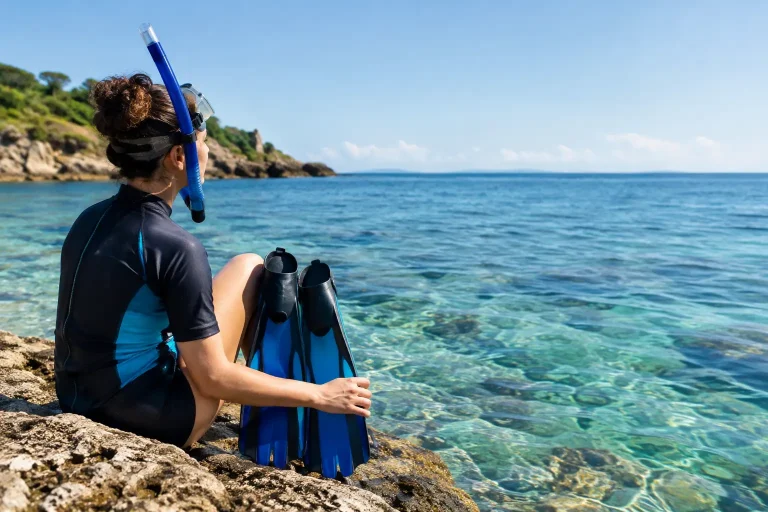
Fins should fit snugly enough that they do not fly off in moving water, but not so tight that they cause cramping or blisters. For shore entry, fins are useful once you are floating in deeper water. Do not try to walk over rocks or coral in them. Carry them to waist-deep water, put them on while floating or sitting safely in the sand, then start swimming.
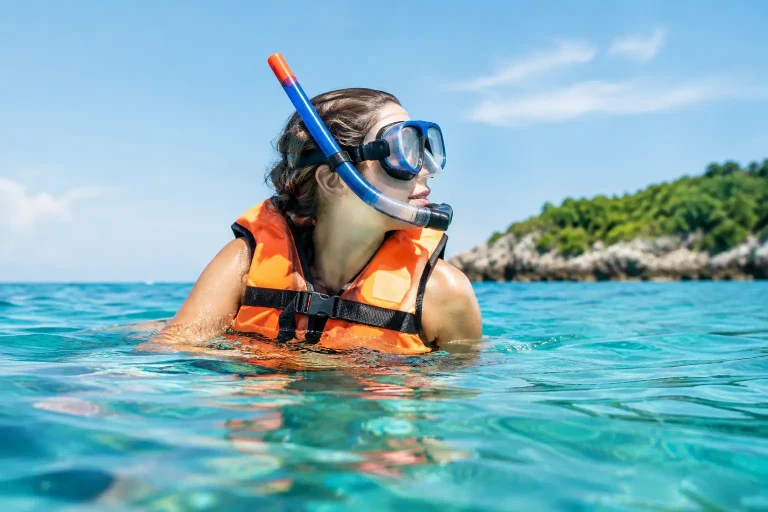
A properly fitted flotation device is smart for many snorkelers, including decent swimmers. It helps conserve energy, supports relaxed surface floating, and makes you easier to spot. It does not replace swimming ability or good judgment. If you cannot comfortably swim in open water, stay in shallow, calm water with qualified supervision rather than pushing farther out because you have a vest.
Wear a rash guard or sun-protective swim shirt if you will be out for a while. Your back, shoulders, and calves can burn fast while you are staring down at fish. Use reef-conscious sun protection when possible, but give it time to set before entering the water so it does not wash off immediately.
How to Snorkel Safely From Shore at the Entry
The most awkward part of a shore snorkel is usually the first 30 feet. Slow down there. Watch the timing of the waves for a few minutes rather than charging in at the biggest set like it owes you money.
On a sandy entry, shuffle your feet instead of taking big steps. This helps you keep balance and reduces the chance of stepping directly on something hidden in the sand. In areas with stingrays, the shuffle is especially useful because it gives an animal a chance to move away.
On a rocky entry, use your hands only on stable surfaces and keep three points of contact whenever possible. Never grab coral. Coral can cut you, break under your weight, and take years to recover from damage that happened in seconds. If there is no clear, safe path through the rocks, do not force it.
Once the water is deep enough, float before putting your face down. Take a moment to clear your snorkel, settle your breathing, and check that your buddy is okay. Starting relaxed is a safety move, not a vacation mood board.
When you exit, begin heading back before you are tired. Keep your mask on until you are stable in shallow water so you can see rocks, sea urchins, and wave movement. Remove fins only when you are safely out of the surge zone or standing on a clear sandy bottom.
Swim Like You Have a Return Trip
The easiest mistake in snorkeling is getting mesmerized by what is below you and forgetting what is happening around you. Lift your head regularly. Check your buddy, your distance from shore, boat traffic, surface conditions, and the landmark you chose before entering.
Swim parallel to shore first when exploring a new area. Going straight out may lead you into deeper water, boat lanes, or stronger current before you understand the site. Keep enough energy in reserve to return without panic. Snorkeling is not the time for an accidental endurance test.
Stay with a buddy, close enough to get each other’s attention quickly. This is not a vague “we came to the same beach together” arrangement. Know who is watching whom. If someone needs to adjust gear, feels cold, gets water in their snorkel repeatedly, or starts breathing hard, both people turn back.
If you feel current carrying you, do not fight it with a full-speed swim straight against the flow. Stay calm, signal your buddy, and move across the current toward a safer area or shore if you can do so without exhausting yourself. If you cannot make progress, float, conserve energy, and call or signal for help. Panic burns the energy you need.
Avoid snorkeling near boat traffic. Small boats, jet skis, and paddlecraft may not see a snorkeler’s head, especially in glare or chop. Bright gear or a surface float can improve visibility, but neither gives you a free pass into a busy channel.
Wildlife Is Wild – Keep It That Way
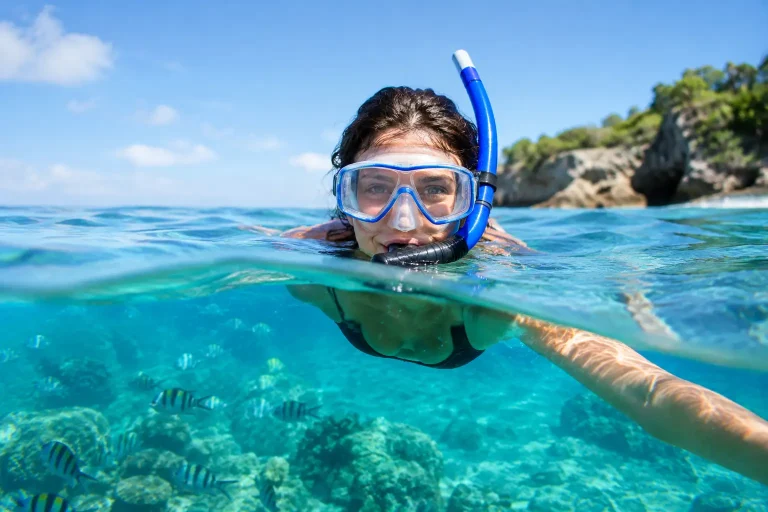
Seeing a manatee glide through clear water or a sea turtle cruise past the reef is the kind of moment people remember long after their tan fades. The right move is simple: stay calm, give the animal room, and let it choose the distance.
Do not touch, feed, chase, block, ride, or pet marine animals. Yes, even if the animal comes close. Especially then. Touching can stress wildlife, damage protective coatings on their bodies, alter their behavior, and turn a peaceful encounter into a bad one for both of you.
Keep your fins away from coral, seagrass, and the bottom. Hover horizontally and move slowly. You will see more when you are not thrashing around, and you will avoid turning a living habitat into a cloudy mess of sand.
If you spot an octopus tucked into a crevice, a ray resting on the bottom, or a turtle feeding, enjoy the sight without crowding it. A good wildlife encounter is not measured by how close you got. It is measured by whether the animal got to keep doing its thing.
Know When a Guided Shore Snorkel Is the Better Call
A guide is not just there to point at fish. At a quality shore-snorkel operation, the team knows the entry route, watches conditions, fits gear, monitors the group, and recognizes the spots where wildlife tends to appear without bothering it.
That is especially valuable if you are visiting a new place, have only basic snorkeling experience, or want to find marine life without wandering into the wrong section of water. Champion Snorkel, for example, uses shore entry and professional wildlife spotters in a protected marine sanctuary setting, with a passive-interaction approach that keeps the experience about the animals, not harassing them for content.
You do not need to be a fearless ocean athlete to have a great shore snorkel. You do need to be honest about the conditions, your swimming ability, and the fact that turning back is sometimes the smartest move. Pick the calm day, enter with a buddy, leave wildlife alone, and come back to shore with enough energy to talk about what you saw.