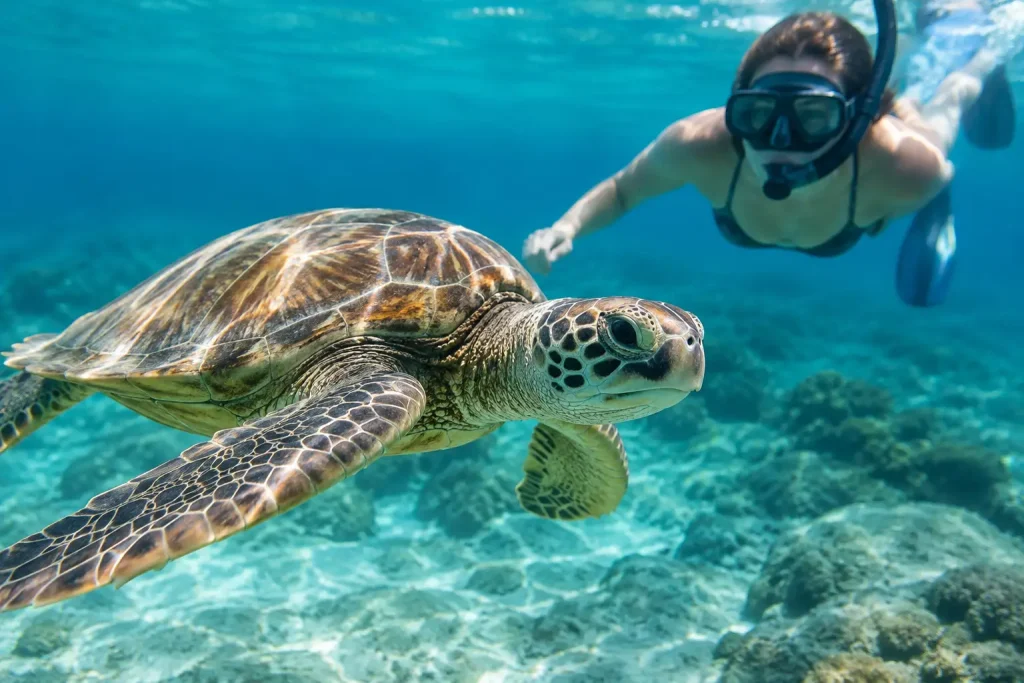
A sea turtle gliding past you in clear water can make your whole vacation. You may be close enough to see the pattern on its shell, watch it surface for air, and get the photo you will show everyone back home. But can you touch sea turtles snorkeling? No. Not gently. Not for a quick selfie. Not because the turtle swam close first.
That is not us trying to ruin the fun. The hands-off rule is what gives you a real wildlife encounter instead of a stressed animal trying to escape a crowd. The best snorkeling memories happen when you float calmly, give the turtle room, and let it decide where it wants to go.
Why You Should Never Touch a Sea Turtle
Sea turtles are wild animals, not underwater pets. A turtle that looks calm may be resting, feeding, recovering energy, or simply tolerating people because it has nowhere else to go. Reaching for it can interrupt that behavior in a split second.
Touching can also transfer bacteria, sunscreen residue, and other contaminants to the turtle. Their shells are hard, but they are living tissue with sensitive areas around the eyes, flippers, and soft edges. Grabbing, riding, blocking, or petting a turtle is even worse. It can cause injury, force the animal to burn valuable energy, and change the way it behaves around people.
There is a legal side, too. Sea turtles are protected wildlife in Puerto Rico and throughout U.S. waters. Harassing, handling, or disturbing them can bring serious consequences. “I only touched it for a second” is not a great defense when the animal is protected.
The simple rule is this: look with your eyes, not your hands. Your camera can come along. Your hands stay to yourself.
What Counts as Disturbing a Turtle?
Most people know not to grab a turtle. The less obvious stuff matters too. Wildlife disturbance is not limited to physical contact.
Chasing a turtle so it keeps swimming away is disturbance. Swimming directly over it, surrounding it with friends, cutting off its path to the surface, or diving down in its face can be disturbance. Feeding it to get a closer photo is a hard no. So is touching the shell with a snorkel fin because you drifted too close.
Accidents happen, especially in waves or current. If you make accidental contact, do not panic and do not try to “fix” it by touching the turtle again. Back away slowly, regain control of your position, and give it a clear path out.
A good guide will help you read the moment. If a turtle is actively feeding, resting under a ledge, or moving away, that is your cue to create more distance. There is always another angle, another turtle, or another chance. There is only one animal dealing with every visitor who decides the rules do not apply to them.
How Close Can You Get While Snorkeling With Sea Turtles?
There is no magic distance that works perfectly in every situation. Conditions change, turtles move, and visibility can make a safe gap feel larger or smaller. The goal is to leave enough room that the turtle can behave naturally and leave in any direction without having to dodge you.
As a practical starting point, stay at least 10 feet away whenever you can. If the turtle comes closer on its own, hold your position. Do not reach out. Do not swim toward it. Let the animal pass through its own space while you float, kick lightly, and enjoy the moment.
This is where being calm pays off. Fast kicking, splashing, and frantic diving usually push wildlife away. Slow, controlled movement makes you less disruptive and often gives you a better view. Funny how the less you chase the encounter, the more likely it is to feel like a real encounter.
Let the Turtle Set the Terms
A turtle may surface right beside you, then drift away five seconds later. That is not a failed sighting. That is a wild turtle doing turtle things.
Your job is not to make it perform. Your job is to be a respectful guest in its home. Stay horizontal in the water, keep your fins away from the reef or seagrass, and avoid hovering above the animal. If it changes direction to avoid you, you are too close.
Why Hands-Off Snorkeling Is Actually Better
A touch lasts a second. Watching a turtle feed, cruise through seagrass, or rise slowly to breathe can last much longer when it does not feel pressured.
Hands-off behavior also protects the places turtles depend on. Seagrass beds are feeding grounds. Coral and rocky structure provide shelter for fish and other marine life. When snorkelers stand, kneel, or kick through these areas to get closer, they damage the habitat that makes wildlife sightings possible in the first place.
The same rule applies to manatees, rays, starfish, octopus, and tropical fish. No touching, no feeding, no petting, no chasing. Wild animals should never have to choose between their normal behavior and getting away from a person with a phone.
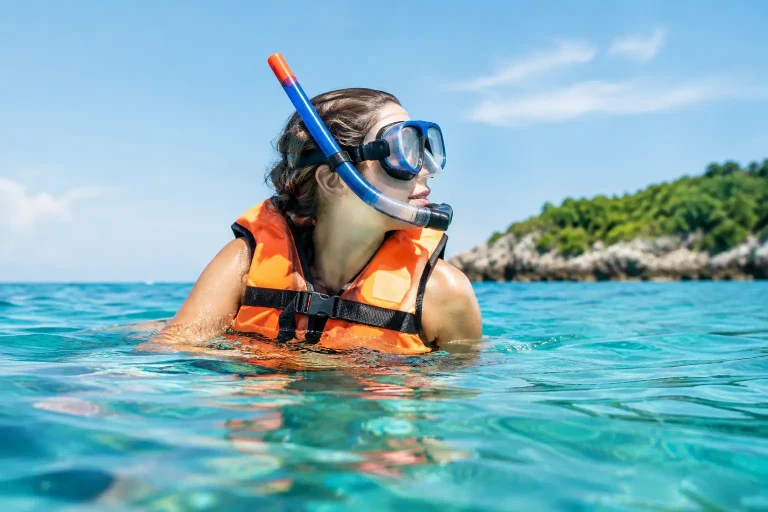
At Champion Snorkel, that passive-interaction approach is not a buzzword. It is how guided shore-entry snorkeling should work. You swim out from the beach, use the gear and life jacket provided, follow the guide, and encounter free-ranging wildlife on its terms. There is no boat, no captive animal setup, and no guarantee that nature will clock in on schedule.
Get the Photo Without Getting Too Close
You do not need to be inches from a turtle to get a great picture. In fact, respectful distance usually makes for a better image because you capture the animal in its environment instead of filling the frame with shell.
Use a wide-angle setting if your camera has one, keep your movements slow, and shoot from the side rather than directly above the turtle. If the turtle is moving away, let it go. A blurry photo is not worth a stressed animal or a risky swim into shallow rocks, boat traffic, or another snorkeler.
Skip the flash, especially in low light. Avoid selfie sticks that put a camera in the turtle’s face. And please do not turn your back on the water while trying to frame a shot. Waves, current, and other swimmers do not pause because you are working on content.
Snorkel Smart Before You Look for Turtles
Turtle etiquette starts before you see a turtle. Choose a snorkeling experience that treats wildlife as wildlife, not a prop. Listen to the safety briefing. Be honest about your swimming ability. A life jacket helps with flotation, but it does not turn rough water or a nervous swimmer into a good situation.
For shore-entry snorkeling in San Juan, conditions can shift with wind, swell, rain, visibility, and current. Some days are glassy and easy. Other days call for extra caution, a different route, or a reschedule. That is not bad service. That is the ocean refusing to be managed by a calendar.
Arrive ready to swim, not ready to negotiate the rules once you are in the water. Secure your mask, keep your fins controlled, and follow your guide’s directions around wildlife. If you need help adjusting equipment or feel uncomfortable after entry, say so early. The smart move is always better than pretending you are fine.
If Someone Else Touches a Sea Turtle
You do not need to start an underwater argument. Keep your distance, protect your own position, and alert your guide or a local authority when appropriate. A calm reminder from a guide can stop a bad interaction before it becomes a bigger problem.
If you are snorkeling on your own, model the behavior you want other people to copy. Give the turtle room. Do not crowd a group that is already watching it. When one person stays calm, others often follow. When one person rushes in, the whole scene turns into a mess fast.
The close encounter you want is still possible without a touch. Float quietly, watch the turtle move through its world, and leave it exactly as wild as you found it. That is the kind of vacation story worth bringing home.